The short answer
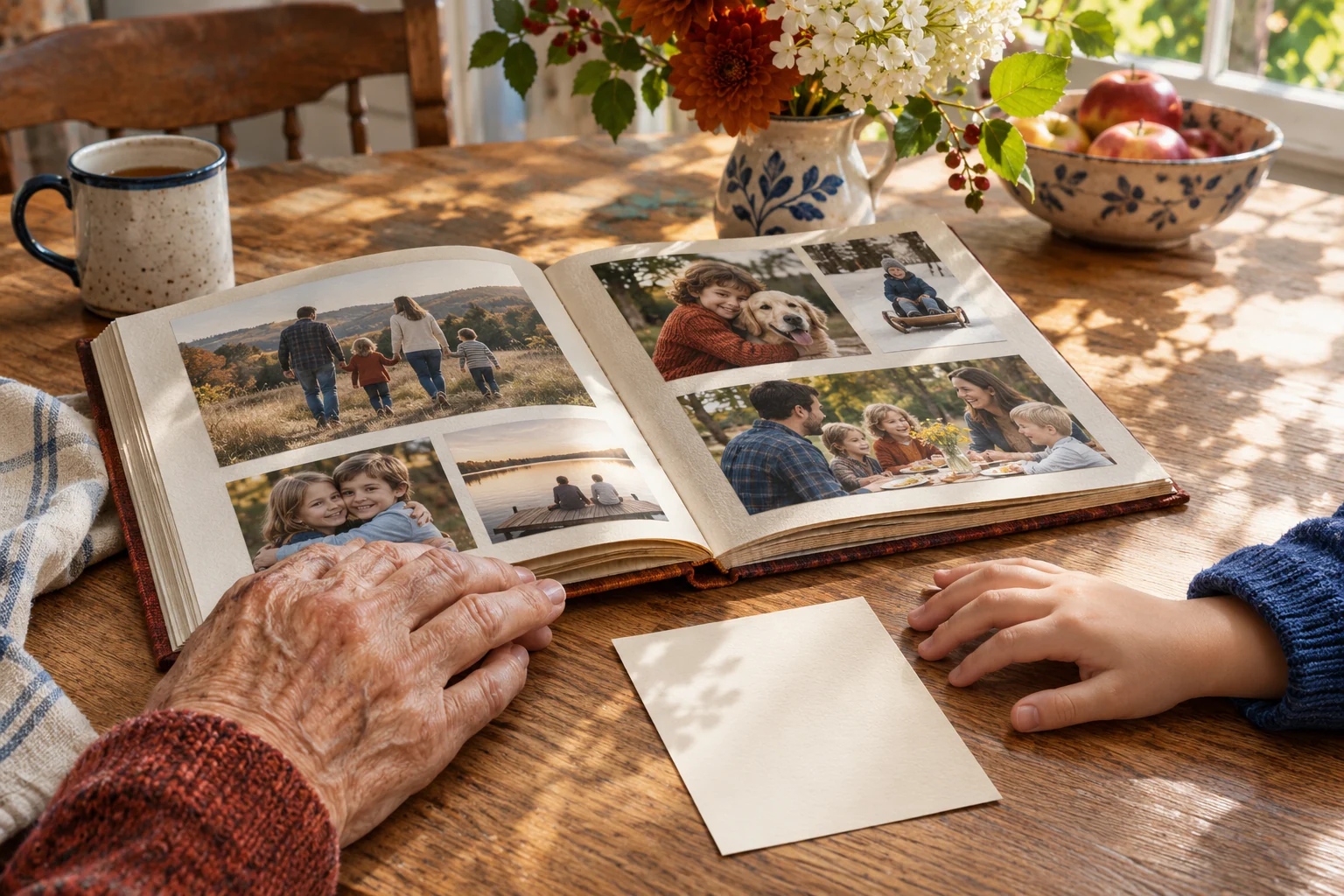
Choose one small story the grandchild can recognize: who is in the family, a shared visit or an everyday tradition. Gather the original photographs, add short captions in your own voice and select a format for the child’s handling and reading habits.
- A book made by a grandparent needs a clear reader, not the whole family archive.
- Keep the original scan or photograph separately from the print project.
- Ask the family before uploading the child’s pictures or private information.
Three manageable projects
| What to make | What to gather | Format to consider |
|---|---|---|
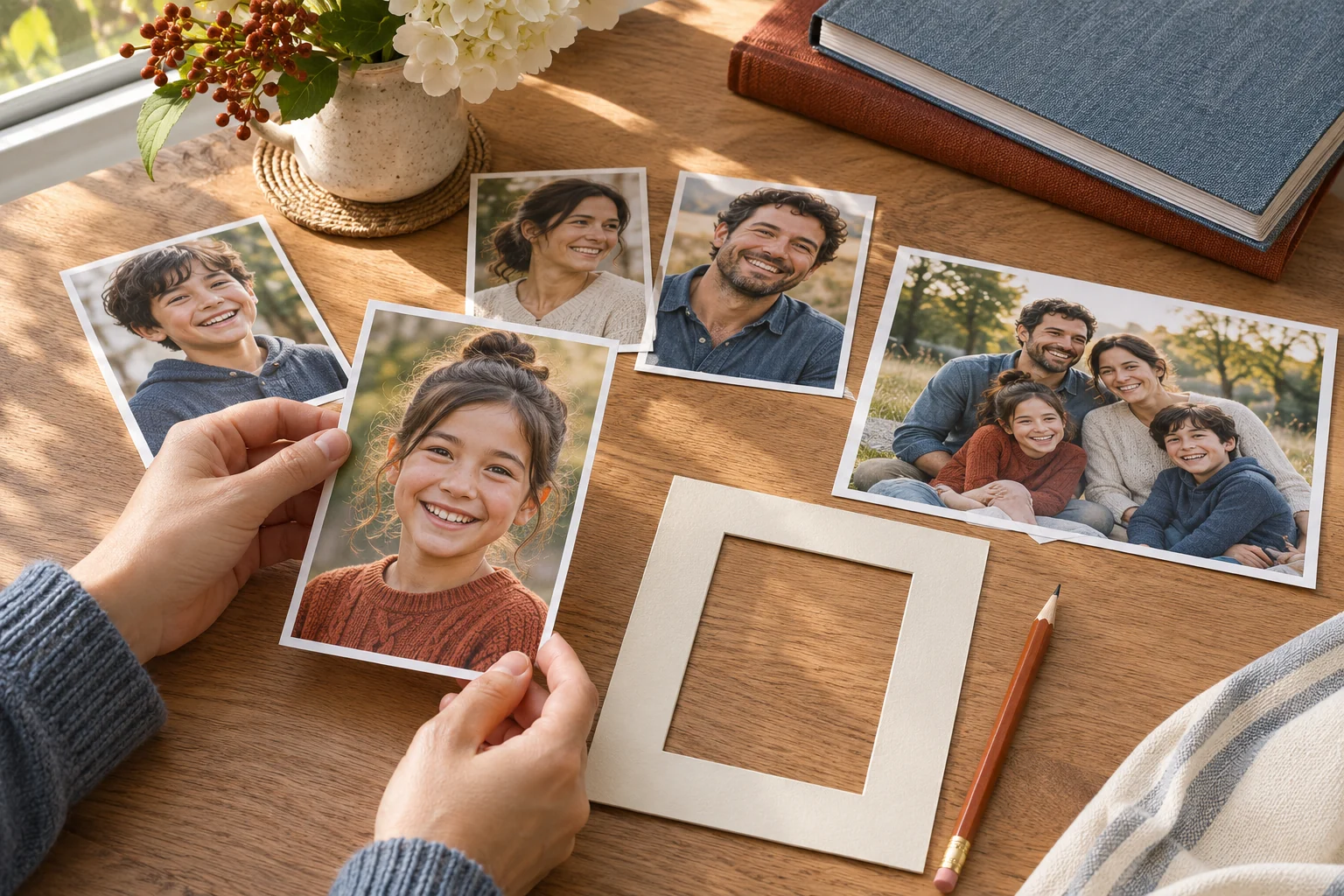
| Our familiar faces | Clear pictures of a small group of people, with the names the child uses. | Pinhole Press Names & Faces board book |
| The day we spent together | A short sequence of a visit, outing or shared activity. | A small photo album or layflat photo book |
| When I was your age | Selected older photographs, dates where known and simple explanations. | An album with enough room for legible captions. |
| Our family story, to keep adding to | A few present-day photos and room for later additions. | A prompted or manually completed family album |
A comparison of published formats and features, not a physical quality ranking. Product options, availability and final prices can change; check the linked seller.
What should a grandparent’s photo book be about?
Make it about one shared relationship, place or routine the grandchild can understand. A focused book is easier to finish and easier to read together than a complete family history.
Try the trip to the park, making pancakes or the people who live in your house. If the child has not visited, show a few ordinary things they might recognize on a video call. Name the room, the cat or the tree rather than leaving every caption as a date.
How can I use old photographs without losing the originals?
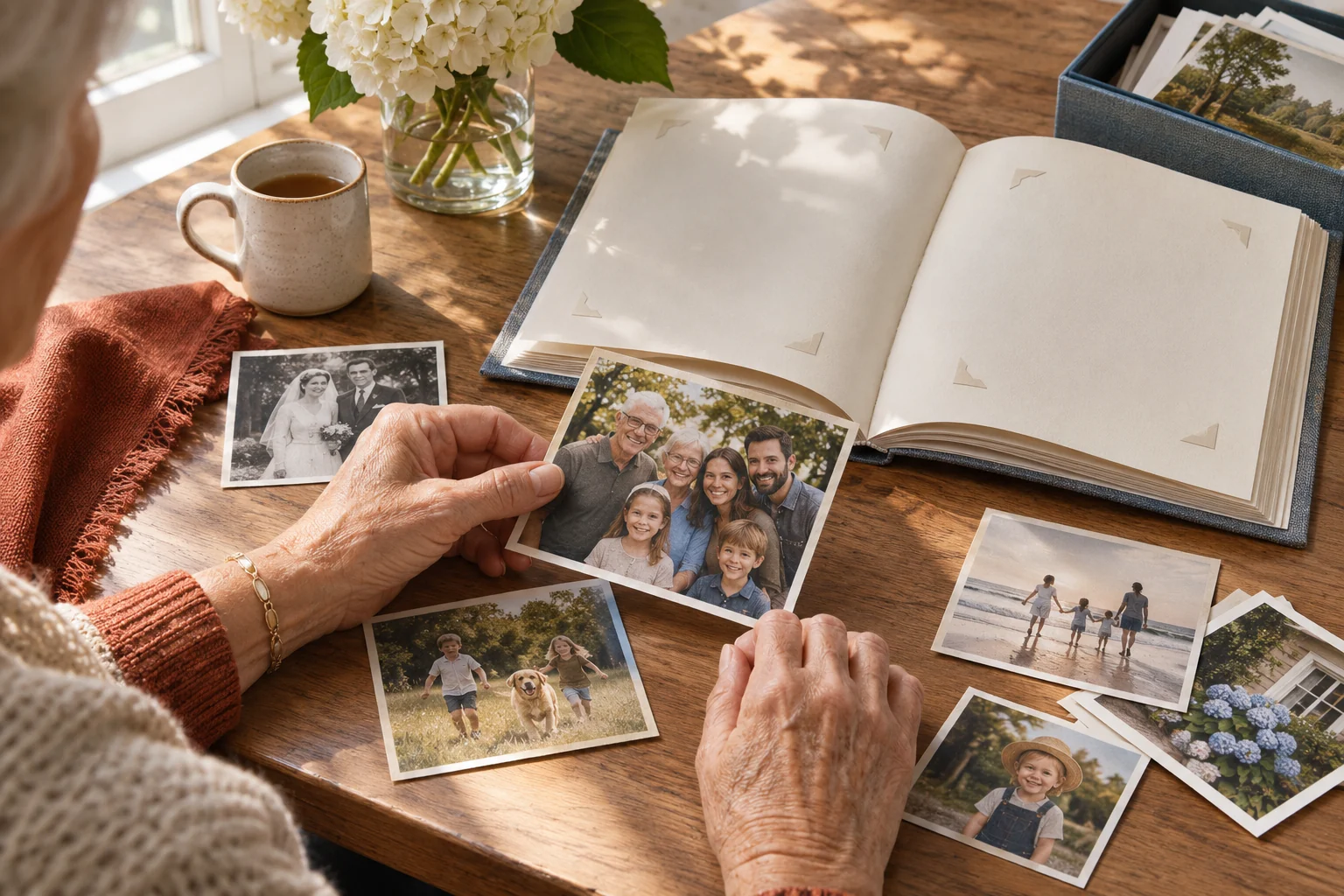
Make a clear scan or digital copy, keep that file and the original photograph separately, then work on a duplicate in the book editor. Check that faces remain recognizable at the intended print size.
Ask a relative who knows the picture before filling in names or dates. If you are uncertain, say “about 1975” or leave the date out. A caption about what you remember is useful without turning a guess into family history.
Which book format will my grandchild actually use?
Choose a small board-page book for an appropriate young reader, or a paper-page album when you will read and explain it together. Check dimensions and page material on the exact listing.
Pinhole Press’s names-and-faces book is a photo-board-book option. Shutterfly’s layflat range offers albums with different materials and sizes. “Hardcover” alone does not tell you what the pages are made of or how easily a small child can turn them.
What should I write, and should I make two copies?
Write as though you are talking to the child, and consider a second copy if you want to read together from different homes. Keep the captions short enough to read comfortably in the chosen format.
A sentence such as “This is the garden where we looked for the red watering can” gives the child something to notice. A question on the last page can invite the next conversation. Before ordering copies, preview each dedication and compare the final price; do not assume every maker offers a duplicate discount.
Whose permission should I get before uploading pictures?
Ask the child’s parent or guardian and anyone whose private image or story you intend to include. Use the family’s preferred display names and avoid extra personal details that do not belong in the book.
This guide concerns an album you make. If you want to appear as an illustrated story character instead, our grandchild-gift guide compares that separate choice, including relevant storybook products.
Before you order
- Choose one theme and identify the intended reader.
- Keep clear original files and confirm names or uncertain dates.
- Check caption size, page crops and the exact construction.
- Get permission and decide who will keep each copy.
A few common questions.
Do I need a new family portrait?
Should I upload my whole family archive?
Sources & scope
We researched the product pages below. Check the linked maker for current options, availability and final specifications. These guides do not report physical product tests.
- Pinhole Press: Names & Faces board book ↗
- Shutterfly: layflat photo book formats ↗
- Artifact Uprising: Baby Board Book specifications ↗
- Artifact Uprising: The Story of You baby book ↗
- Shutterfly: uploading photos and resolution recommendations ↗
Product information reviewed November 8, 2026. Check the linked maker’s latest options and specifications before ordering.